
Active experiment

Prometheus Protocol

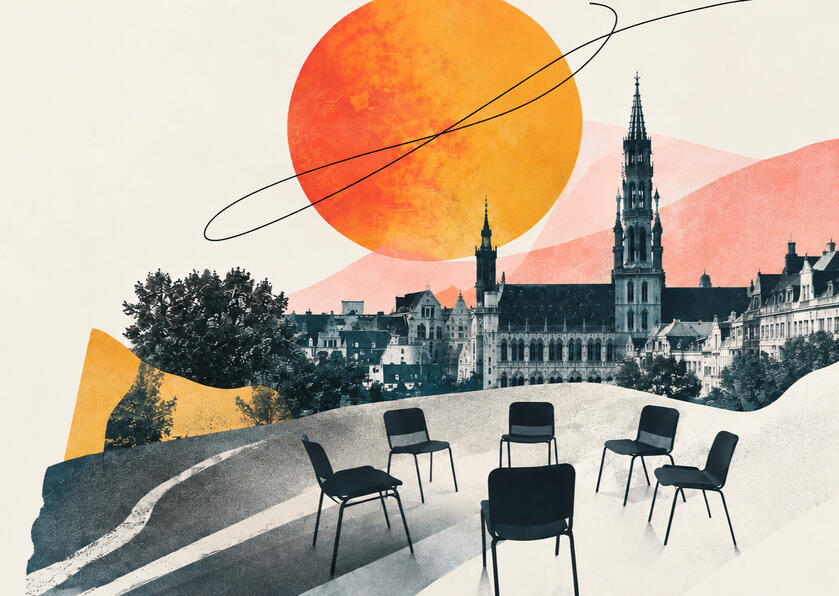
A civic rehearsal for collective agency in the age of AI.

Most people encounter Al as something already decided. The Prometheus Protocol creates a different experience.Participants step into live scenarios where consequential decisions about Al are being made, then rehearse what collective agency feels like before those decisions become inevitable.


Rehearsing the future in the present

We are living through a genuine unravelling. Not a crisis to be managed and returned from but a threshold: old institutions are losing their grip while new forms of civic life are not yet fully visible, and the gap in between can feel like freefall.

Many responses to this moment ask people to wait. To hold on until things settle, until the right institution steps in, until there's more clarity. But those conditions never arrive on their own, and waiting just delays learning what might work.

Something changes when people experience acting with others, even once, even briefly, imperfectly. It's not only what they understand that changes, but how they relate to their own capacity. What felt like someone else's problem becomes a shared question. What felt too large becomes something that can be moved, at least a little, from where you are today.That's what this work is for.


Locally rooted, multiple scales

Complex challenges are felt most sharply in communities, even when their drivers sit elsewhere. That's also where many resources and relationships live, so we design experiments where people have energy and something at stake.Some experiments start with a small group. Others involve networks, federations, or multiple places working in parallel. The focus in all is on sparking action.What travels is not just the ignition format, but the experience of a shift. People carry that pattern into their own contexts, adapting it in ways we couldn’t have predicted, without needing permission.

The Prometheus Protocol is one expression of this approach: a civic rehearsal format that has travelled through Oxford, São Paulo, and Coimbra, changing shape in each place as people adapt it to their own tensions, contexts, and possibilities.


This might be for you

People and organisations working across local, national, and translocal scales, especially when change feels too large, too fast, or too fragmented to respond to alone.

GROUPS
You can see assets and possibilities, but the first move isn't obvious yet. What can help is a shared experience that makes action feel energising, not risky.

COMMUNITIES
The relationships, skills, and motivation are there. What's missing is a shared impulse and a light structure to start without anyone needing to become an expert first.

NETWORKS
You connect people across places, but this moment asks for more. You want to spark experiments, hold coherence, and work with unlikely allies without centralising control.

FEDERATIONS
You hold infrastructure across organisations – governance, resources, reach – and want ways to activate that capacity at the speed of what's unfolding.

... AND BEYOND.
Artists, technologists, young people, organisers, entrepreneurs, and anyone who senses the next forms of civic life emerging at the edges.

Ways in

Different moments call for different ways to begin.
All pathways start from what already exists in a place: local assets, real tensions, and the possibility for new forms of participation to emerge through experimentation.
They differ in depth, time commitment, and the kind of infrastructure that starts to form.

First experience
Activation ● 60 minutes to half a day
Participatory experience that surfaces what's already in the room and leaves each person with one concrete move.

Read more ↓

No preparation needed. No prior knowledge of AI, community resilience, or civic innovation. Just a real tension and a group willing to spend some time on it together.

The seed protocol, the most portable version of this, can travel without facilitation support. Anyone who has lived it once can run an informal version.

(function() { var wrapper = document.currentScript.parentElement; var toggle = wrapper.querySelector('.readmore-toggle'); var content = wrapper.querySelector('.readmore-content'); toggle.addEventListener('click', function() { content.classList.toggle('open'); if (content.classList.contains('open')) { toggle.textContent = 'Show less ↑'; } else { toggle.textContent = 'Read more ↓'; } }); })();

Sprint
Ignition ● 1 day to 3 weeks
Short sprint that turns overlooked assets into visible action, a first signal that something new is possible.

Read more ↓

Sprints can also take place inside existing convenings – a network gathering, a federation meeting, a conference – where people are already assembled but need a designed space to turn conversation into experimentation, first moves, and early prototypes.

(function() { var wrapper = document.currentScript.parentElement; var toggle = wrapper.querySelector('.readmore-toggle'); var content = wrapper.querySelector('.readmore-content'); toggle.addEventListener('click', function() { if (content.style.display === 'block') { content.style.display = 'none'; toggle.textContent = 'Read more ↓'; } else { content.style.display = 'block'; toggle.textContent = 'Show less ↑'; } }); })();

Practice Cycle
Practice ● 6 to 10 weeks
Structured loops to test, reflect, and adapt until insight becomes repeated practice.

Read more ↓
It generates something tangible: a group that has practised how to act together, and a prototype that's worth developing further.

This is often where organisations shift from being hosts to becoming anchor institutions, as the capacity generated through the experiment stays within the network or the community.

(function() { var wrapper = document.currentScript.parentElement; var toggle = wrapper.querySelector('.readmore-toggle'); var content = wrapper.querySelector('.readmore-content'); toggle.addEventListener('click', function() { if (content.style.display === 'block') { content.style.display = 'none'; toggle.textContent = 'Read more ↓'; } else { content.style.display = 'block'; toggle.textContent = 'Show less ↑'; } }); })();

Field Lab
Infrastructure ● 6 to 18 months
Sustained space where repeated experimentation builds working relationships and new ways of organising.

Read more ↓

A field lab starts with a shared question, a design logic, and enough committed people to generate something genuinely new. What emerges – new civic arrangements, funding flows, or ways of organising – is discovered through the work, not designed in advance.

This is the layer where individual experiments become a pattern, and where that pattern begins to reshape the institutions and networks that hosted them.

(function() { var wrapper = document.currentScript.parentElement; var toggle = wrapper.querySelector('.readmore-toggle'); var content = wrapper.querySelector('.readmore-content'); toggle.addEventListener('click', function() { if (content.style.display === 'block') { content.style.display = 'none'; toggle.textContent = 'Read more ↓'; } else { content.style.display = 'block'; toggle.textContent = 'Show less ↑'; } }); })();


What begins as a small experiment can ripple far beyond where it starts.


Experiments in motion

Some examples of how real tensions can be turned into live prototypes across fields and scales. Each can unfold as a rehearsal, a sprint, a practice cycle, or a lab, depending on the context and ambition.These experiments can also be read as a progression: from making systems visible, to exercising public power, to acting locally, to building shared capacity across places.


Prototypes in testing

Prometheus Protocol 🔥Live rehearsal on AI, power, and democratic imagination

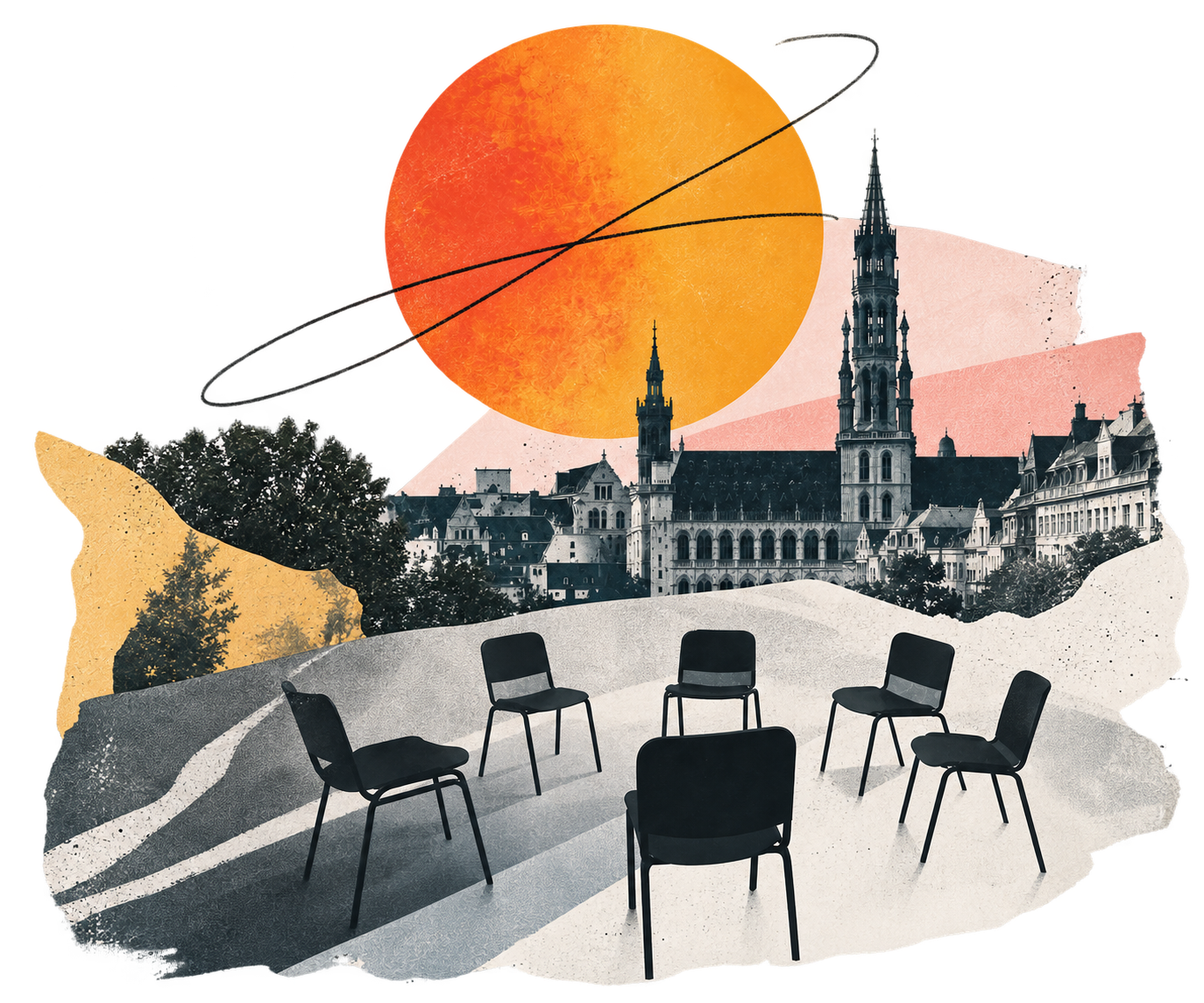
A civic rehearsal format where people move from observing systems to stepping into them.The Prometheus Protocol invites participants to experience what it feels like to act together on questions about AI and power that are increasingly shaping public life without meaningful public participation.

How it works

Inspired by Forum Theatre, participants enter structurally honest fictional scenarios, freeze the scene at the moment of maximum tension, and test different ways of intervening from inside the situation itself.The point is not to “solve” the scene, but to rehearse participation under real constraints: pressure, uncertainty, conflicting interests, institutional inertia, uneven power.As people step into the scenes, new possibilities begin to surface. Shared language emerges. Unexpected alliances appear. New proposals break through deadlocks.Participants leave not only with analysis from the debrief, but with an embodied experience of how power and constraint operate in practice, and a clearer sense of where leverage, initiative, and collective action might begin from where they are.They also encounter alternative infrastructures, governance models, and ownership approaches that challenge the idea that the current direction of AI is inevitable.

This is not about AI as technology.
It looks at AI's political economy.
Who owns the infrastructure? Where are power and wealth concentrating? How might local communities, public institutions, and civic actors regain influence over systems shaping society?

How it travels

Each iteration is documented openly. The interventions people attempt inside the scenes, the tensions that repeatedly surface, the unexpected framings participants generate, and the practical moves that feel possible afterwards all become part of a growing commons: a living record of civic ingenuity across contexts.The scenes, facilitation materials, and learnings from each edition are shared openly so participants and partners can adapt, remix, and carry the protocol into their own communities and contexts.

Previous iterations

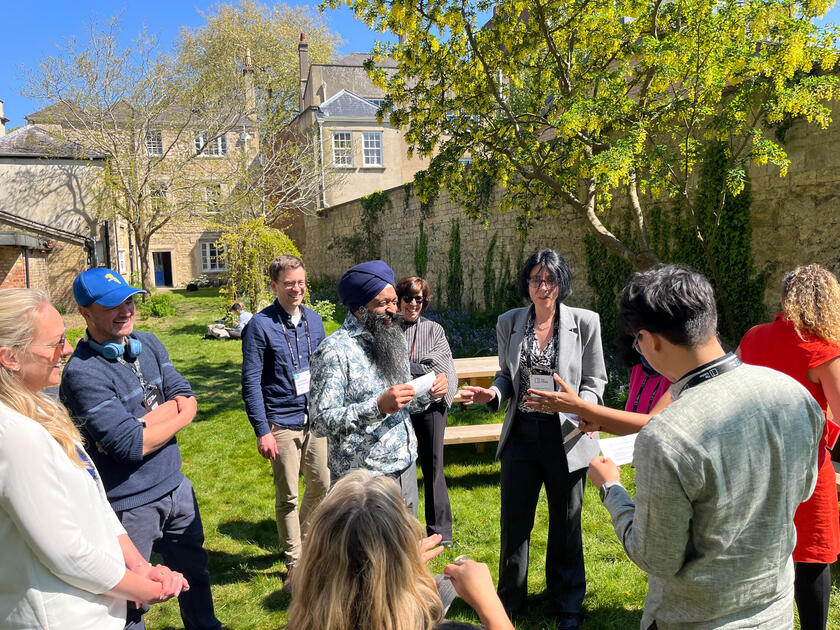
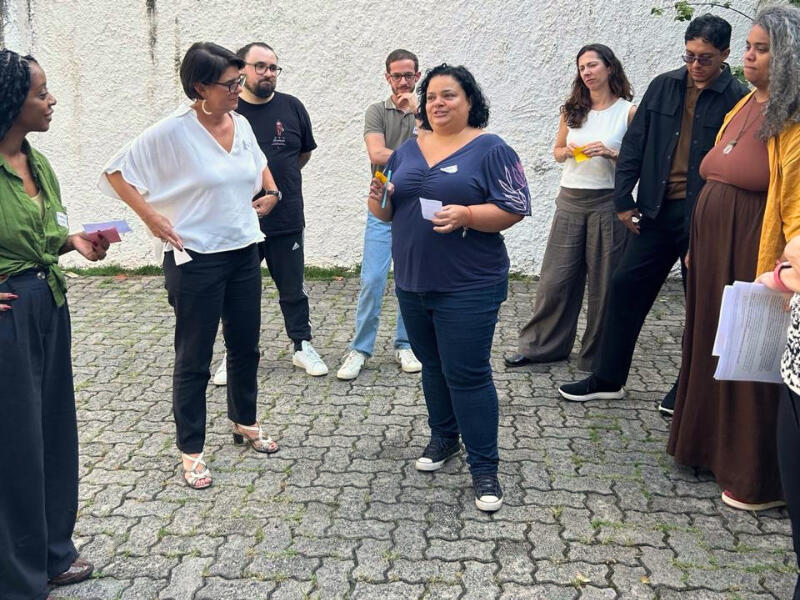
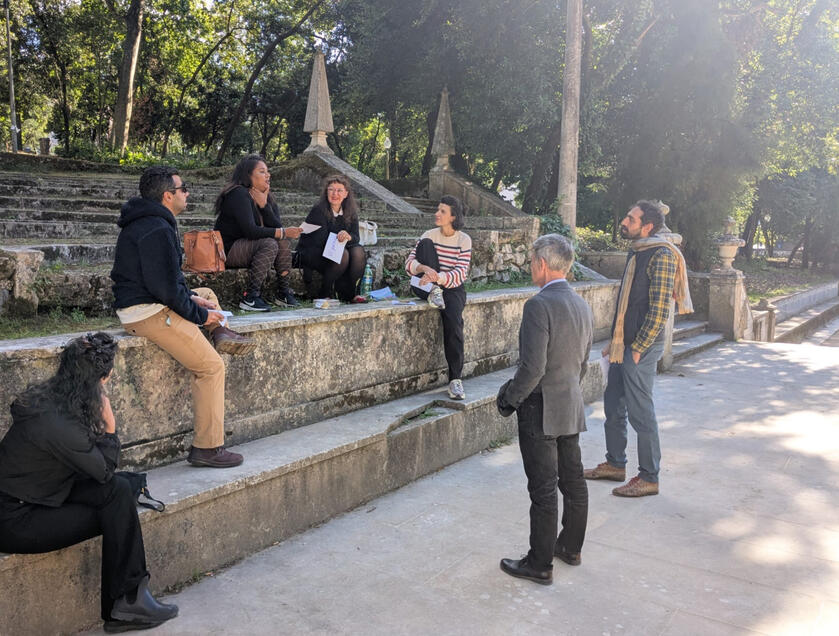
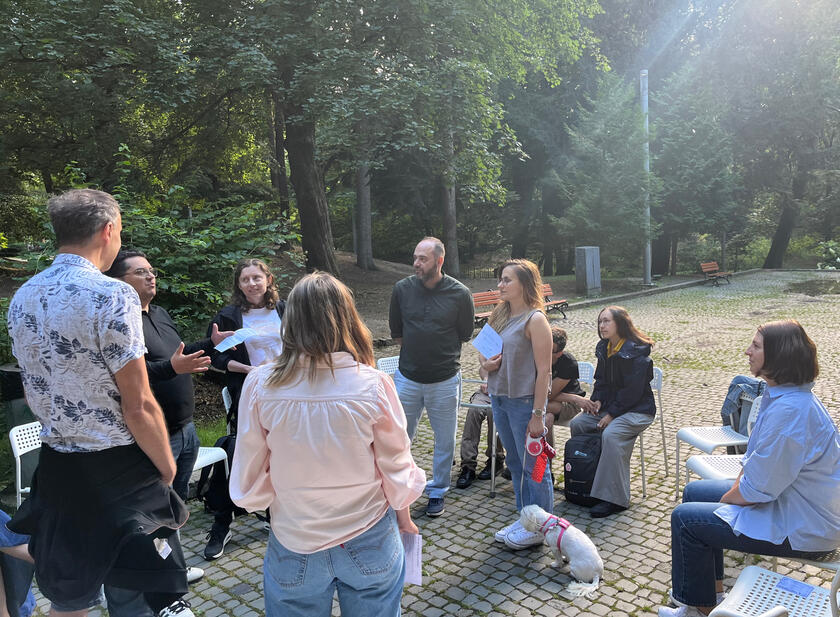
Oxford – April 2026 at Sidebar
Scenes set in a foundation funding room, a data ownership dispute, a standards-setting meeting under pressure.

São Paulo – May 2026 at Jornada IA para Impacto
Scenes for a Brazilian context: a social impact fund, a public health procurement in the SUS, a corporate-social data partnership.

Coimbra – May 2026
Scenes rooted in Coimbra's civic and research landscape: a university bid for European AI infrastructure caught in vendor dependency, a student self-governing house deciding to hand its 200-year institutional memory to a platform, a community health model built on Mondego valley data about to be sold to insurers.

Next iterations

Seville – 5 June 2026, 7:00pm

Further iterations in development across Europe and beyond.
If you want to host a session, adapt the protocol for your context, or follow what we are learning as it travels, get in touch.


An emerging ecology

Across different places and fields, people are experimenting with new ways of organising, participating, and responding together as existing structures become less reliable and change accelerates.Collective Futures is one small node in that wider ecology.Over time, these experiments can help communities develop more resilient and participatory civic forms: rooted in real places, connected across contexts, and able to adapt as conditions change.The goal is a society where collective action is not limited to professionals, organisations, or moments of crisis, but becomes something more people can ignite and shape together.If you're working on something similar, we'd love to connect.

Field notes

function showMessage() { setTimeout(function() { const msg = document.getElementById("success-message"); msg.style.display = "block"; setTimeout(function() { msg.style.opacity = "1"; }, 50); }, 400); }

Build this with us

Collective Futures grows through participation.Each experiment begins with a real tension somewhere: a community trying to respond to change, a network searching for new forms of action, a group of people sensing that existing structures are no longer enough.What matters is not having the perfect design in advance, but creating the conditions to try something together.Some people host a first rehearsal. Others adapt a protocol to their own context, contribute new scenes, document what emerges, or carry experiments into places we could never reach alone.


The work evolves through use.Everything is designed to remain open, adaptable, and shareable across communities and contexts.The value is in the spark, not the ownership.If something here feels alive or necessary in your context, we'd love to hear from you.

Practice stewardship

I'm Alexandra Stef, initiator and designer of this practice. Over the past 15 years, I've worked in community organising, philanthropy infrastructure, and action learning, helping groups start moving even when their vision is more ambitious than their initial capacities.The challenges we face now – AI concentrating power, civic infrastructure eroding, local economies struggling, ecological systems breaking down – are planetary-scale in their implications but felt most sharply in local communities, where people feel disconnected from the levers of power. Institutions, and most civic practice, were not designed for this level of accelerating instability.Collective Futures is part of my response: designing live experiments that help people activate the practical democratic imagination needed to act together today.It's an open, evolving practice. If something here resonates, I'd love to hear from you.[email protected]

Frequently asked questions

What makes this work in practice?

A few conditions matter a lot.

The work starts from a real tension, something people can actually feel, not a hypothetical problem.

It stays close to what’s already present: the relationships, capacities, constraints, and energy in the room. We don’t try to import a solution from elsewhere.

The first moves are small enough to try, even if they’re incomplete. That matters more than getting them right.

There’s a balance between structure and openness. Enough design to hold people through uncertainty, but not so much that everything is predetermined.

And importantly, the work includes reflection on what actually happened, not just what was intended. That’s what allows it to evolve and travel.

None of this guarantees outcomes. But when these conditions are in place, something tends to shift. People begin to see what they can do together, and that’s usually where things start.

What actually happens in one of your sessions?

It depends on the format, but in every case it's something more than a workshop. Participants don't sit and listen for long. They move, take positions, work in small groups on real tensions, and leave with something specific: a first move, a committed conversation, a connection to someone they didn't expect to find themselves working with.

We publish field notes from each session so you can see what actually happened, including what didn't quite land, not just what we designed for.

What would working together look like?

It usually starts with a real tension in your context. Something that feels urgent, stuck, or emerging that people can feel but don't yet know how to move on.

From there, we design a first experiment: a live activation with a small group, usually around 15 - 20 people.

Sometimes that first move is enough. Sometimes it opens something people want to continue.

In those cases, the work can extend into a series of experiments, across places, or into developing and adapting the underlying protocols.

There is no standard pathway. Each step depends on what becomes possible next.

Is this facilitation? Consulting? Training?

None of these exactly.

It's not facilitation in the usual sense. The goal isn't only to help a group process what it already knows, but to surface and activate what isn't yet visible, especially unnoticed assets and possibilities.

It's not consulting because there's no diagnosis, recommendations, or solutions handed over. It's also not training because there's no fixed program or a curriculum to go through.

The closest description is a designed activation, something that creates the conditions for people to discover what they can do together today, and to build from there.

Is it only for established organisations?

No. Organisations are often anchor partners or convenors, but the work isn't limited to formal institutions.

It also happens with community members, informal groups, emerging networks, and sometimes with a mix of people who wouldn't usually find themselves experimenting together.

Part of the intention is to make space for new civic actors and forms of organising to emerge, not only to strengthen what exists.

What is the bigger ambition behind this work?

At the most immediate level, it's about helping people move together on real challenges now.

The bigger ambition is to contribute to a more civically capable society, where collective action isn't limited to professionals, institutions, or rare moments of mobilisation, but becomes something more people can access and practise.

That includes supporting existing organisations, while also making room for new groups, networks, and ways of organising to emerge as older structures begin to loosen.

document.querySelectorAll(".accordion-header").forEach(header => { header.addEventListener("click", () => { const currentlyActive = document.querySelector(".accordion-header.active"); if (currentlyActive && currentlyActive !== header) { currentlyActive.classList.remove("active"); currentlyActive.nextElementSibling.style.maxHeight = null; } header.classList.toggle("active"); const content = header.nextElementSibling; if (header.classList.contains("active")) { content.style.maxHeight = content.scrollHeight + "px"; } else { content.style.maxHeight = null; } }); });

Live experiments for collective action. Rooted in place, designed to travel.

Behind the practice

Stewarded by Alexandra Stef, based in Madrid and working internationally.Working languages: English, Spanish, Romanian.

Writing

Notes to surface patterns, ask better questions, and share learnings beyond single initiatives.